Arctic Governance: Enhancing SOCOM's Expertise for High North Operations
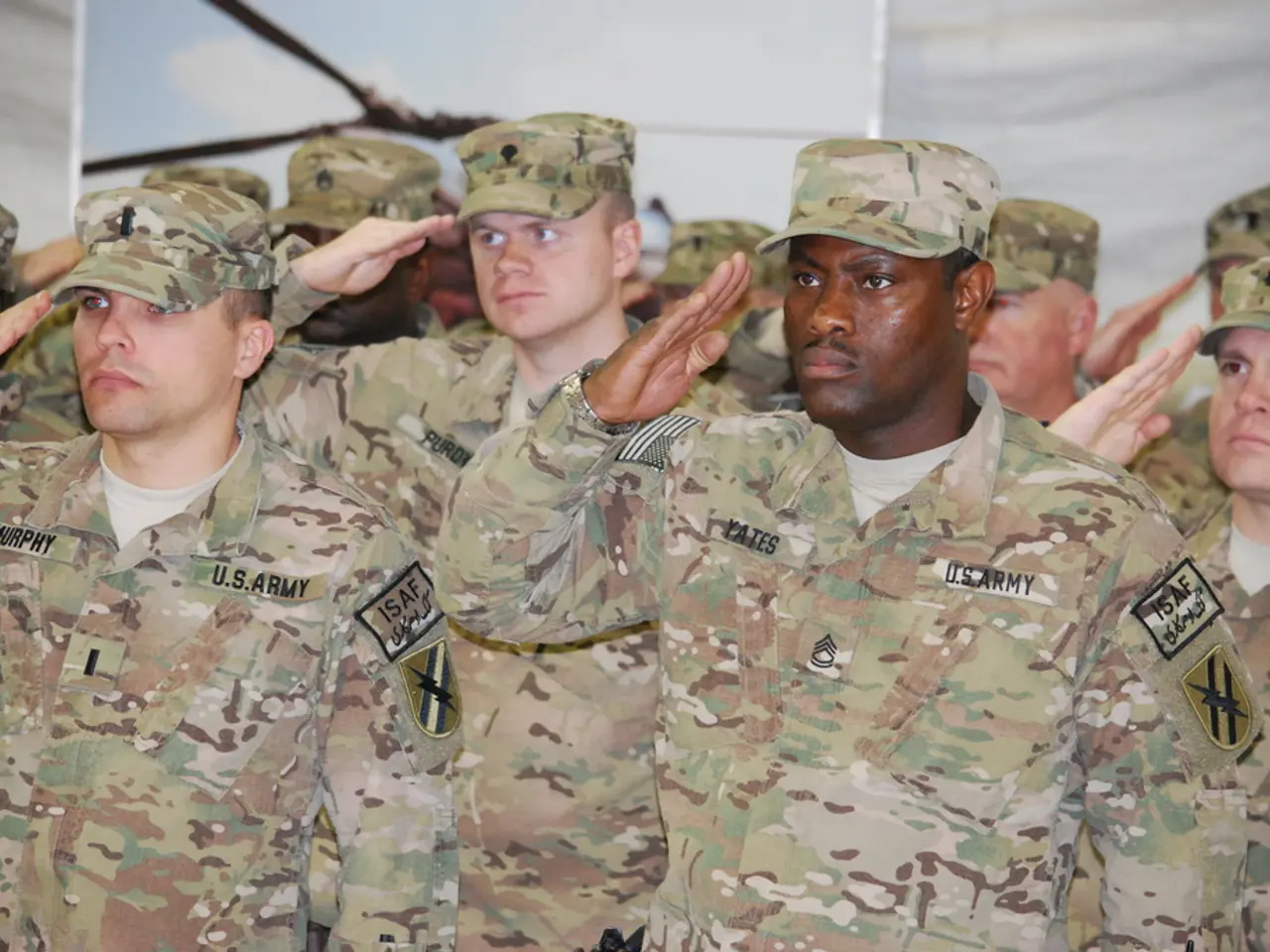
The Arctic region, with its vast expanse and unique operating environment, is becoming a focal point of strategic interest for several global powers, including Russia and China. In response, the US Army Special Operations Forces (SOF) are proposing a shift in focus to better address the challenges posed by the High North.
According to the Army's Arctic strategy, "Regaining Arctic Dominance," rapidly developing Arctic-capable forces is not feasible. To bridge this gap, the development of specialized Civil Affairs Teams (CATs) capable of operating in polar environments is proposed.
The 92nd Civil Affairs Battalion, US Special Operations Command's Europe-aligned CA unit, is uniquely suited to fulfill this mission. The battalion is tasked with addressing the lack of Arctic-oriented CA capacity through the establishment of a winter warfare section within the 92nd, and the creation of one high north CAT per company capable of operating in a polar environment.
High north CATs will undergo rigorous training, focusing on military mountaineering and winter warfare, to ensure they are equipped to handle the extreme conditions of the Arctic. This training can be obtained at the Army Mountain Warfare School in Vermont or the Black Rapids Training Site in Alaska.
The skills and knowledge gained from specializing in winter warfare will not diminish the ability to map networks or identify and employ civil networks. Instead, it will enhance their capacity to operate effectively in the High North, where the lines between traditional government and indigenous governance are blurred.
High north CATs will be responsible for engagements within the US Special Operations Command-North (SOCNORTH) and Special Operations Command-Europe (SOCEUR) areas of responsibility. This will offer opportunities for applying governance expertise and honing skills, particularly in the management of tribal governance and the maintenance of critical infrastructure in extreme conditions.
Engagements with organizations such as the Alaska State Troopers and McMurdo Station can increase understanding of these unique challenges. Additionally, the annual Adamant Serpent exercise can be adapted for a cross-functional team, with a CAT advising the local government on managing incursion-induced crises.
Creating mountain warfare CATs and demonstrating a shared skill set builds rapport across SOF by removing infiltration as a barrier to entry for operations. This cooperation is crucial, as both Russia and China are showing increased interest in the Arctic region due to access to natural resources and expanding trade routes.
Moreover, high north CATs will enhance persistent presence missions in mountainous or Arctic countries and serve as a force capable of attaching to other SOF elements in the event of contingency operations in the polar regions.
In the essay "Competing in the Arctic through Indigenous Group Engagement and Special Reconnaissance Activities," Colonel Kevin D. Stringer, the author of the winning Project 6633 essay, proposes that US Army Special Forces should be the primary special operations effort in the high north. He also suggests that the US Army Special Forces should maintain regular and persistent engagements with the indigenous peoples of the Arctic.
The development of Arctic-capable CATs requires specialized training for shooting, moving, communicating, and surviving in extreme Arctic conditions. This training is essential to ensure that these teams can provide access, presence, and influence in a region seeing increased Chinese interest and Russian posturing.
In conclusion, the development of high north CATs is a strategic move to enhance US Special Operations Forces' capabilities in the Arctic region. By focusing on winter warfare training and engagement with indigenous communities, these teams will be well-equipped to handle the challenges posed by the High North and contribute to the overall strategic goals of the US in this critical region.
Read also:
- Nightly sweat episodes linked to GERD: Crucial insights explained
- Antitussives: List of Examples, Functions, Adverse Reactions, and Additional Details
- Asthma Diagnosis: Exploring FeNO Tests and Related Treatments
- Unfortunate Financial Disarray for a Family from California After an Expensive Emergency Room Visit with Their Burned Infant