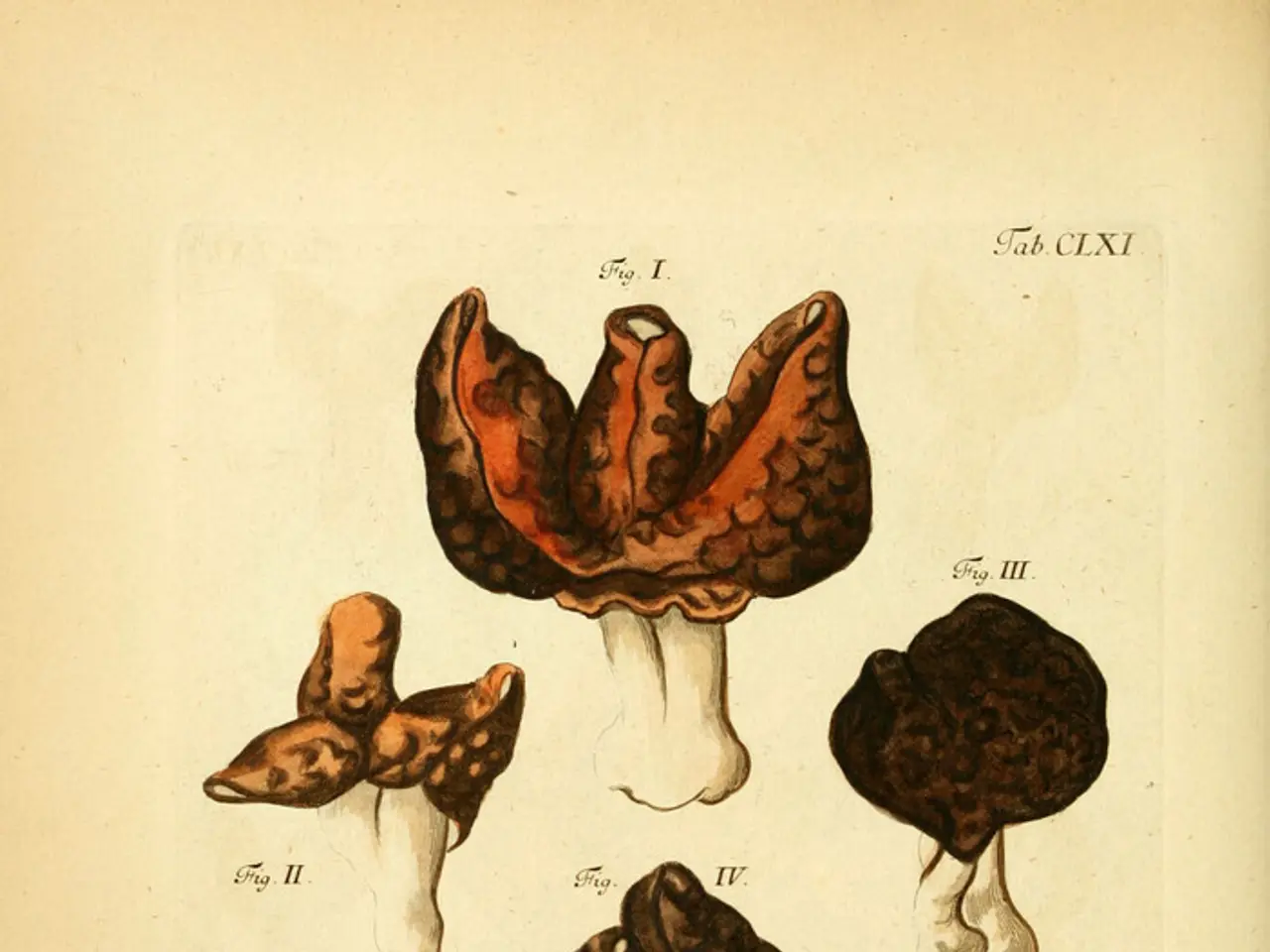
Cultivating Shiitake Mushrooms: Infusing Logs with Mushroom Spores
In the realm of mushroom cultivation, one variety stands out for its versatility and flavour - the Shiitake mushroom. Here's a step-by-step guide on how to produce your own Shiitake mushrooms.
Research suggests that the best time to fell trees for Shiitake inoculation is during winter and early spring, before the leaves appear. This timing allows the logs to be prepared and inoculated under optimal conditions.
When harvesting trees for Shiitake production, it's important to do so as part of an overall forest management plan. Trees should be cut to their final length, with diseased and wounded sections, forks, crotches, and major kinks removed.
The logs should then be cut from live, healthy trees or from healthy trees that were recently harvested. They should be of an optimum size - around 4-6 inches in diameter and 3-4 feet in length.
Maintaining log moisture content above 35% is crucial during log preparation. Logs can be stored off the ground to minimize contaminants, and rain and snowfall can be permitted to wet the logs, or they can be protected from drying winds and direct sunlight.
Once prepared, the logs are inoculated with live Shiitake spawn. Holes for inoculation should be spaced 3-4 inches between rows and 3 inches apart moving down the rows. The holes are approximately 1 ¼ inches deep with a hole diameter between ¼ and ½ inch.
Spawn can be purchased on several types of media: sawdust, wood dowels, and thimble spawn. When ordering spawn from commercial suppliers, consider factors such as the type of wood, resistance to weed fungi, speed of colonization, ease of fruiting, season of fruiting, ability to stimulate fruiting, required temperature for fruiting, size, shape, colour, and flavour of mushrooms, and mushroom storage characteristics.
After inoculation, logs should be coded to record important information such as spawn strain, tree species, etc. Wounds should be coated in wax to seal in moisture.
Inoculation is the introduction of live Shiitake spawn into the log, producing mushrooms after 6 months to 2 years. It's important to note that different strains of Shiitake perform differently, depending on the conditions they are grown in.
For instance, cold-weather strains develop well on sugar maples, while warm-weather strains perform better on red maples. Shiitake spawn are actively growing mycelia used as inoculum for mushroom cultivation.
In conclusion, with the right preparation, inoculation, and care, you can cultivate your own Shiitake mushrooms, adding a delicious and nutritious addition to your meals. Happy growing!
Please note that while this guide provides general advice, local conditions and specific species may require additional considerations. Always research and consult with local experts before starting your Shiitake cultivation journey.
[Note: The search results did not reveal any specific commercial breeders for Shiitake spawn in Germany.]
Read also:
- Nightly sweat episodes linked to GERD: Crucial insights explained
- Antitussives: List of Examples, Functions, Adverse Reactions, and Additional Details
- Asthma Diagnosis: Exploring FeNO Tests and Related Treatments
- Statistics on the prevalence of drug use and abuse in the United States among various demographic groups