
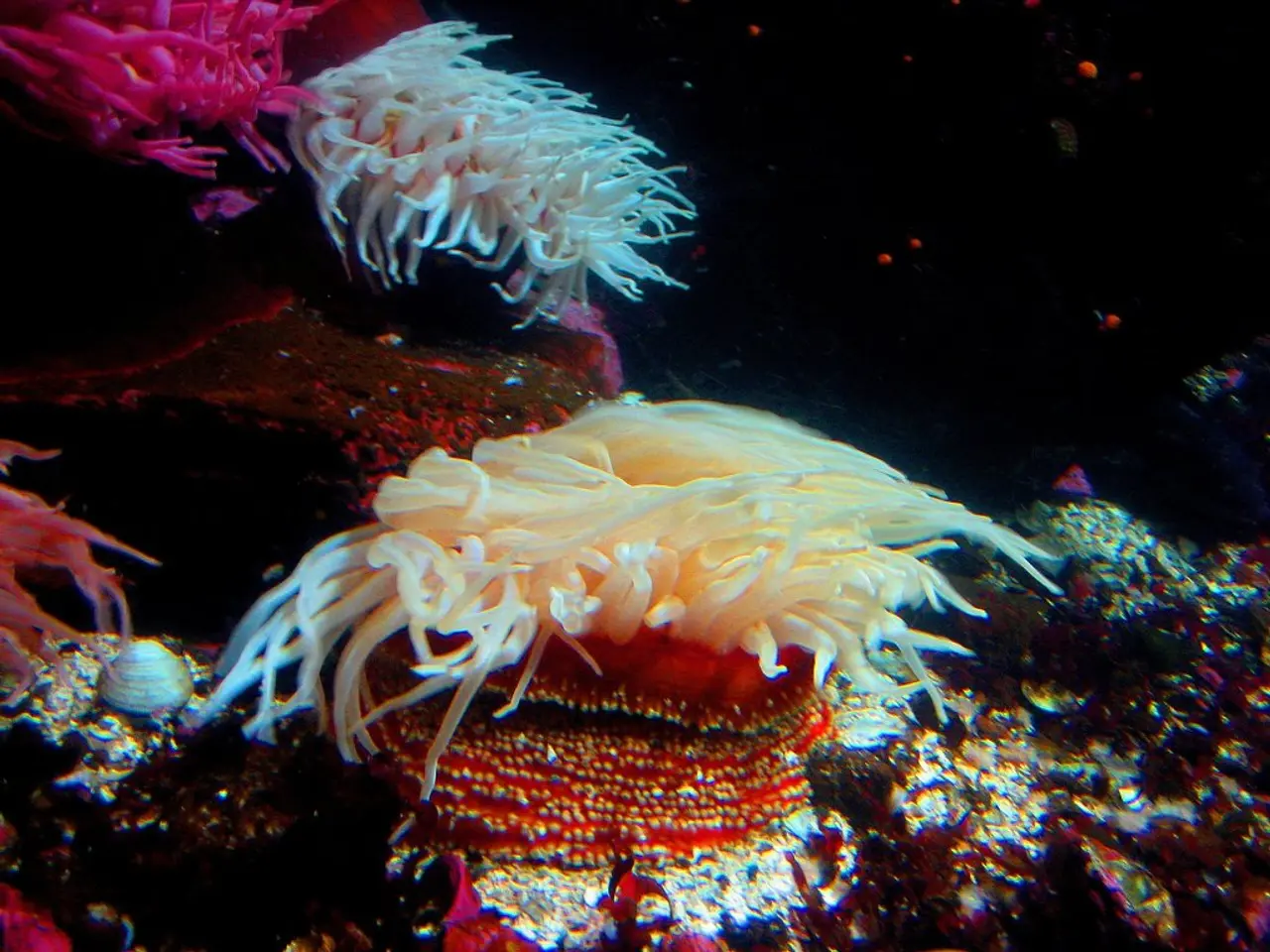
Differences Between Stony and Soft Corals: A Brief Overview
In the captivating world of saltwater aquariums, two types of corals stand out: Small Polyp Stony (SPS) and Large Polyp Stony (LPS) corals. Despite both being stony corals, they have distinct differences in physiology, husbandry needs, and aquarium placement.
SPS corals, characterised by their small polyps and dense calcium-carbonate skeletons, typically grow in branching, plate, or encrusting forms. On the other hand, LPS corals boast large fleshy polyps on a stony skeleton, often growing as solitary or thick-polyped colonies.
Water Quality and Parameter Stability
SPS corals demand very stable, near-optimal reef parameters (calcium, alkalinity, magnesium, temperature, salinity, nitrate and phosphate at low levels) due to their sensitivity to fluctuations. LPS, however, can tolerate somewhat wider parameter swings and higher nutrients (moderate nitrate/phosphate) better than SPS, though they still need stable calcium/alkalinity for skeletal growth.
Lighting
SPS corals, originating from shallow, high-light reef zones, require high-intensity, high-quality lighting (high PAR) and often specific spectrum for colouration and growth. In contrast, LPS prefer moderate lighting; many species do well under lower PAR than SPS and can be placed lower in the water column or shaded by rockwork.
Water Flow
SPS corals evolved in high-energy, turbulent environments and need strong, variable (non-laminar) flow to remove detritus from small polyps and deliver dissolved nutrients and gases. LPS, however, generally prefer low to moderate, gentle, non-direct flow so their fleshy polyps can extend and feed without being damaged.
Feeding and Nutrition
SPS corals rely mostly on photosynthesis via symbiotic zooxanthellae and dissolved/particulate organic matter; some benefit from trace feeding but are less dependent on direct meaty foods. In contrast, LPS are more heterotrophic — many species actively extend feeding tentacles and benefit from regular target feeding (mysis, rotifers, coral foods), which can improve colour and growth.
Growth Form, Fragging, and Placement
SPS corals often grow quickly into branching or plating forms; they need space for growth and are more susceptible to competition and shading. They are commonly placed in high light, high flow areas. LPS may be solitary or form large fleshy colonies that expand; they are commonly placed on sandbeds or lower rockwork under moderate light.
Aggression and Interactions
Many LPS have long, stinging sweeper tentacles or powerful mesenterial filaments and can be aggressive toward neighbors — they often require spacing or placement away from other corals. SPS are less likely to reach with sweeper tentacles but can suffer if shaded or if neighboring corals overgrow them.
Maintenance and Monitoring
SPS systems require frequent testing and tighter dosing/regimen for calcium, alkalinity, magnesium, and trace elements, plus reliable equipment (skimmers, reactors, auto top-off, stable heaters/controllers). LPS systems are more forgiving; routine water changes, stable basic parameters, and occasional feeding are often sufficient for many species.
Disease, Pests, and Fragility
SPS are generally more sensitive to pests (red bugs, montipora-eating nudibranchs), rapid parameter swings, and coral bleaching. LPS can suffer from bacterial infections and tissue recession too, but individual colonies can sometimes recover with feeding and localised treatment.
Quick Comparative Table
| Aspect | SPS (Small Polyp Stony) | LPS (Large Polyp Stony) | |---|---:|---| | Polyps | Small, tightly packed | Large, fleshy | | Light | High PAR, intense | Moderate PAR | | Flow | Strong, turbulent | Low–moderate, gentle | | Nutritional needs | Mostly photosynthetic; sensitive to water chemistry | Photosynthetic + benefits from direct feeding | | Water stability | Very sensitive; needs strict parameter control | More tolerant of moderate variation | | Aggression | Less tentacular aggression; vulnerable to shading | Many species aggressive with sweeper tentacles | | Maintenance | Higher (frequent testing, dosing) | Moderate (regular water changes, feeding) |
Practical Recommendations for Hobbyists
If you want a high-tech, display of colourful branching corals and can commit to daily monitoring, consistent dosing, and powerful lighting/flow, choose an SPS-focused system. If you prefer easier care, visible polyp motion, and target feeding, start with LPS species (e.g., Scolymia, Euphyllia types) placed on lower rock or sand with moderate flow and scheduled feedings. For mixed tanks, place SPS in high, well-flowed areas and LPS lower and spaced to avoid sweeper-tentacle conflicts; keep nutrients at levels appropriate to the dominant coral type and maintain stable Ca/Alk/Mg across both.
Limitations and Caveats
Species vary — some SPS (e.g., hardy Montipora) are easier than delicate Acropora, and some LPS vary in tolerance; consult species-specific care guides before purchase. Advice assumes tropical reef species commonly kept in home aquaria; natural variability and evolving husbandry practices mean recommendations can change with new research and hobby techniques.
For experienced aquarists ready for a challenge, a mixed reef or SPS-dominated tank may be the magnum opus. Robert's content is digestible and aimed at making reefing fun and easy for hobbyists. If you require specific beginner-friendly LPS and hardy SPS species recommendations, or target parameter ranges (exact Ca/Alk/Mg, PAR, flow metrics) and dosing schedules tailored to SPS vs LPS systems, feel free to ask!
Pets can also play a significant role in one's home-and-garden lifestyle, as domesticated pets such as dogs and cats provide companionship and mental health benefits. For those with a taste for excitement and risk, casino-and-gambling can be an engaging hobby, with casino-games like poker being popular choices. Sports, another exciting pastime, can offer physical activity and camaraderie for individuals who prefer more active hobbies. Sports-betting, a subset of sports, provides an opportunity for fans to engage more intensely with their favorite teams and athletes. In both the world of saltwater aquariums and recreational activities, careful consideration is necessary to ensure proper care and maintenance for optimal results.




