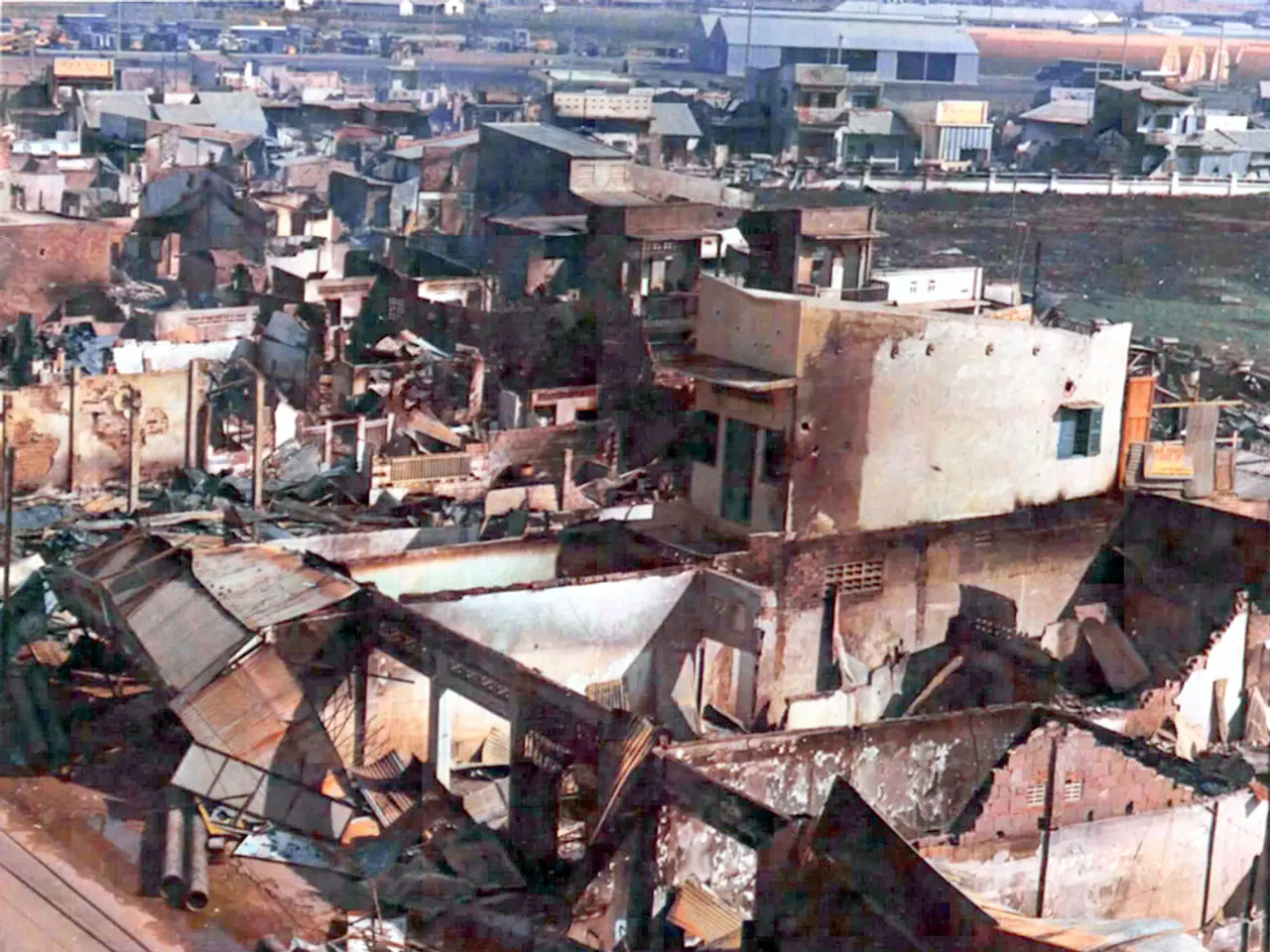
Emergency responders are scrambling to locate survivors amidst Afghanistan's earthquake catastrophe, with fatalities surpassing 1400.
In the heart of Afghanistan, a nation already grappling with deep-seated crises, a major earthquake of 6.0 magnitude has struck, causing extensive damage and flattening villages. The Taliban government has reported over 1400 deaths and more than 3000 injuries across several provinces.
The earthquake, the third major one since the Taliban seized power in 2021, has added to the ongoing crises facing the country. Afghanistan is currently experiencing a massive reduction in aid funding, a weak economy, and the forced return of millions of people from Iran and Pakistan.
The aftermath of the disaster has seen more than 420 health facilities either close or suspend operations due to the funding shortage. This has left the remaining facilities overwhelmed, with insufficient supplies and personnel, and not as close to the affected populations as the more local facilities.
Kate Carey, the deputy head of the UN Office for the Coordination of Humanitarian Affairs in Afghanistan, expressed her concerns, stating that the situation is dire. "Remaining facilities are overwhelmed, have insufficient supplies and personnel, and are not as close to the affected populations as the more local facilities," she said.
In an effort to reach the isolated villages cut off by rock falls, the Save the Children's team has been walking over 19km, carrying medical equipment on their backs. The Taliban government, in response, has set up a camp in Kunar to organize supplies and emergency aid, and is air-dropping commandos to evacuate the injured from areas where helicopters cannot land due to rough terrain.
The international community has responded to the crisis. The UK has pledged £1 million (NZ$2.28 million) for humanitarian agencies, while the European Union is sending 130 tonnes of emergency supplies and providing €1 million (NZ$1.98 million). Other countries, including the United Arab Emirates, India, China, and Germany, have also pledged disaster relief support.
The German medication aid organization action medeor has provided €10,000 in immediate relief funds for the victims of the Afghanistan earthquake, focusing on urgent medical care, food, water, hygiene, and shelter. The German Red Cross (DRK) is also supporting emergency aid in the affected regions, which include Kunar and Nangarhar provinces. Islamic Relief and other partners are actively engaged in providing substantial humanitarian assistance.
Indrika Ratwatte, the UN's resident coordinator for Afghanistan, has warned of a surge in casualty numbers and urged the international community to step forward. Ratwatte stated that rescuers are scrambling in a "race against time" to reach the mountainous and remote area hit by the earthquake.
An aftershock of 5.2 close to the epicentre of Monday's quake rattled the area on Tuesday, but there were no immediate reports of damage. Despite the challenges, the international community and humanitarian sector have been urged to provide aid to Afghanistan in its time of need.