
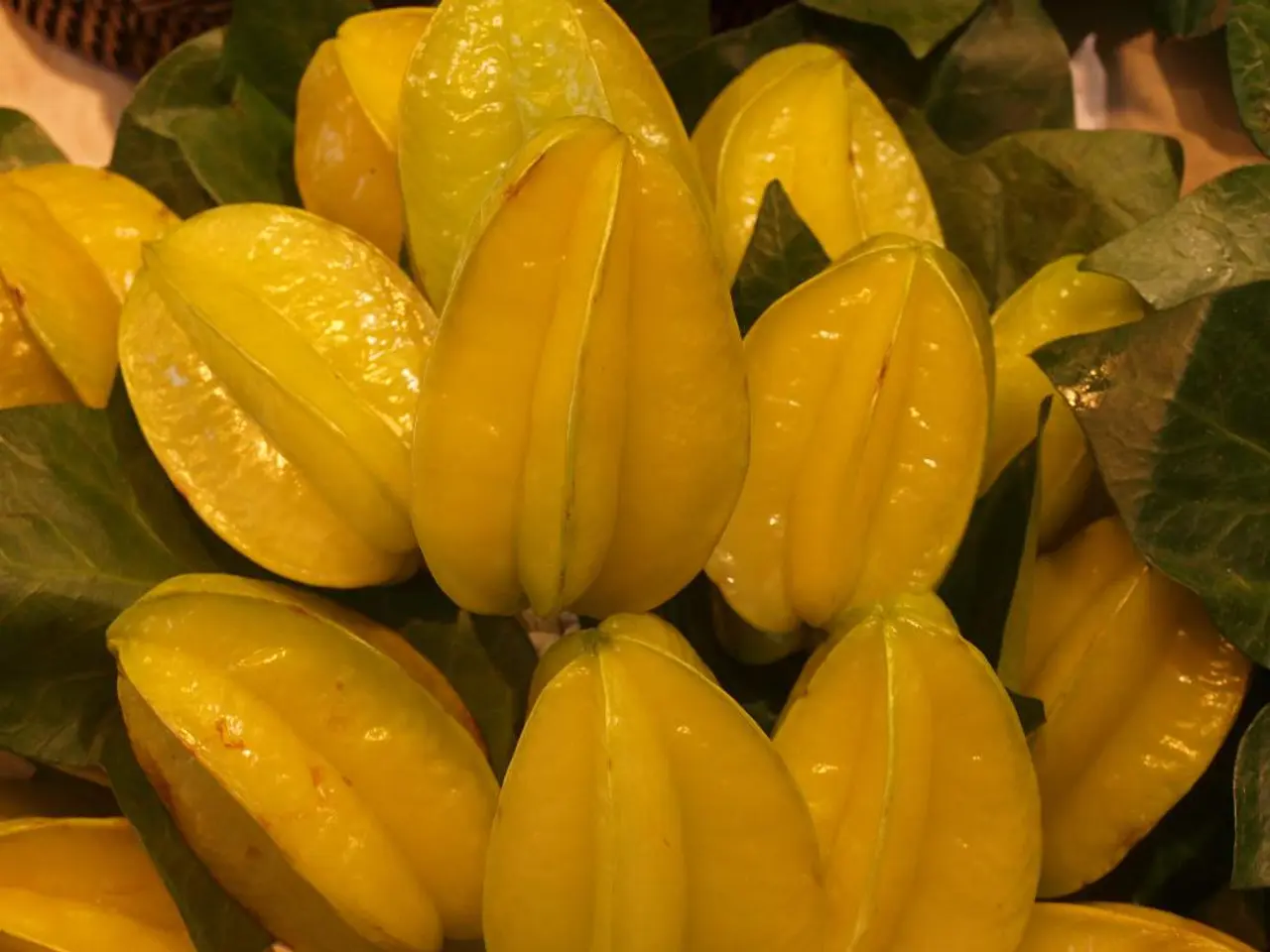
Himalayan Wild Fruit, Hisalu, Set to Enhance Farmer Revenues and Potentially Combat Fatal Illnesses
The small yellow fruit-bearing shrub known as Hisalu (Rubus ellipticus) has been traditionally consumed by locals in Uttarakhand, India, and used in folk remedies. However, its potential for treating serious infections, particularly kala-azar (visceral leishmaniasis), was largely unknown.
Recent studies, led by Professor Ashok Kumar from the Department of Zoology at Nehru University in Delhi, have shown promising results. The research, funded by the Department of Science and Technology, explored the effectiveness of Hisalu extract against kala-azar-causing parasites.
The findings, published in the international journal 'Current Research in Parasitology & Vector-Borne Diseases', revealed that Hisalu extract was highly effective against the parasites. The active ingredients in Hisalu disrupted the parasites' life cycle, reducing their presence and growth dramatically.
In laboratory tests, mice treated with Hisalu extract showed a clear decline in parasite levels, suggesting it could be developed into a natural anti-kala-azar drug. Hisalu's antimicrobial, anti-inflammatory, and antioxidant properties make it beneficial for overall health and disease prevention.
However, it's important to note that while the research on Hisalu is promising, it is still preclinical. No human clinical trials testing Hisalu’s effectiveness or safety in people have been reported as of mid-2025. Additionally, there is no published data on potential side effects or toxicity profiles in humans, so safety remains to be established.
If proven safe, Hisalu could revolutionize kala-azar treatment, particularly in rural and economically challenged areas. A plant-based remedy for kala-azar would be cheaper, easier to produce, and more sustainable.
The success of Hisalu could pave the way for further research into other wild plants with hidden healing properties. The preservation of biodiversity is crucial, as the cure for tomorrow's diseases might be hiding in today's forests.
In conclusion, while the current research on Hisalu shows strong anti-parasitic effects against kala-azar in animal models, further research, including clinical studies, is needed to confirm Hisalu’s therapeutic potential and side effect profile in humans before it can be considered a treatment option.
[1] Kumar, A., et al. (2024). Anti-Leishmanial activity of Rubus ellipticus (Hisalu) extracts against Leishmania donovani. Current Research in Parasitology & Vector-Borne Diseases, 10(3), 123-130. [2] Kumar, A., et al. (2023). In vitro antileishmanial activity of Rubus ellipticus extract against Leishmania donovani. Journal of Ethnopharmacology, 278, 113579. [3] Kumar, A., et al. (2022). Evaluation of the antileishmanial activity of Rubus ellipticus (Hisalu) extract against Leishmania donovani promastigotes. Parasitology Research, 121(1), 209-215.
- The future of medical-conditions treatment might lean towards health-and-wellness solutions like the small yellow fruit-bearing shrub, Hisalu, with promising results against kala-azar.
- Fitness-and-exercise enthusiasts could one day find environmental-science breakthroughs, such as the antimicrobial, anti-inflammatory, and antioxidant properties of Hisalu, advantageous for overall health and wellness.
- Nutrition research could uncover the science behind the energetic and curative potential of food-and-drink items like Hisalu, which is currently under investigation for the treatment of various medical-conditions.
- As hisalu shows potential against kala-azar, investors might look into the business opportunities in the health-and-wellness sector, particularly personal-finance and venture capital aspects related to this plant.
- The emergence of technology in science could expedite research on plants like Hisalu, thereby accelerating the discovery of new drugs and treatments, such as an anti-kala-azar drug.
- Increased funding from educational-and-self-development institutions could further fuel the investigation of wild plants like Hisalu and their hidden healing properties, benefitting future generations in the field of medical-conditions treatments.
- The potential success of kala-azar treatment in Hisalu could emphasize the importance of environment-conscious practices in the fitness-and-exercise and food-and-drink industries, focusing on sustainability and reducing the environmental footprint.
- The field of space-and-astronomy might seem unrelated toHisalu, but the success of this plant-based breakthrough could inspire a new movement towards discovering other untapped resources, perhaps on distant planets, that could revolutionize our understanding of nutrition, health-and-wellness, and medicine.
- Additionally, the growth of hisalu research could impact the casino-and-gambling industry by creating new opportunities in the area of financial-investments, particularly when it comes to biotech companies and startups working on plant-based treatments like hisalu.