
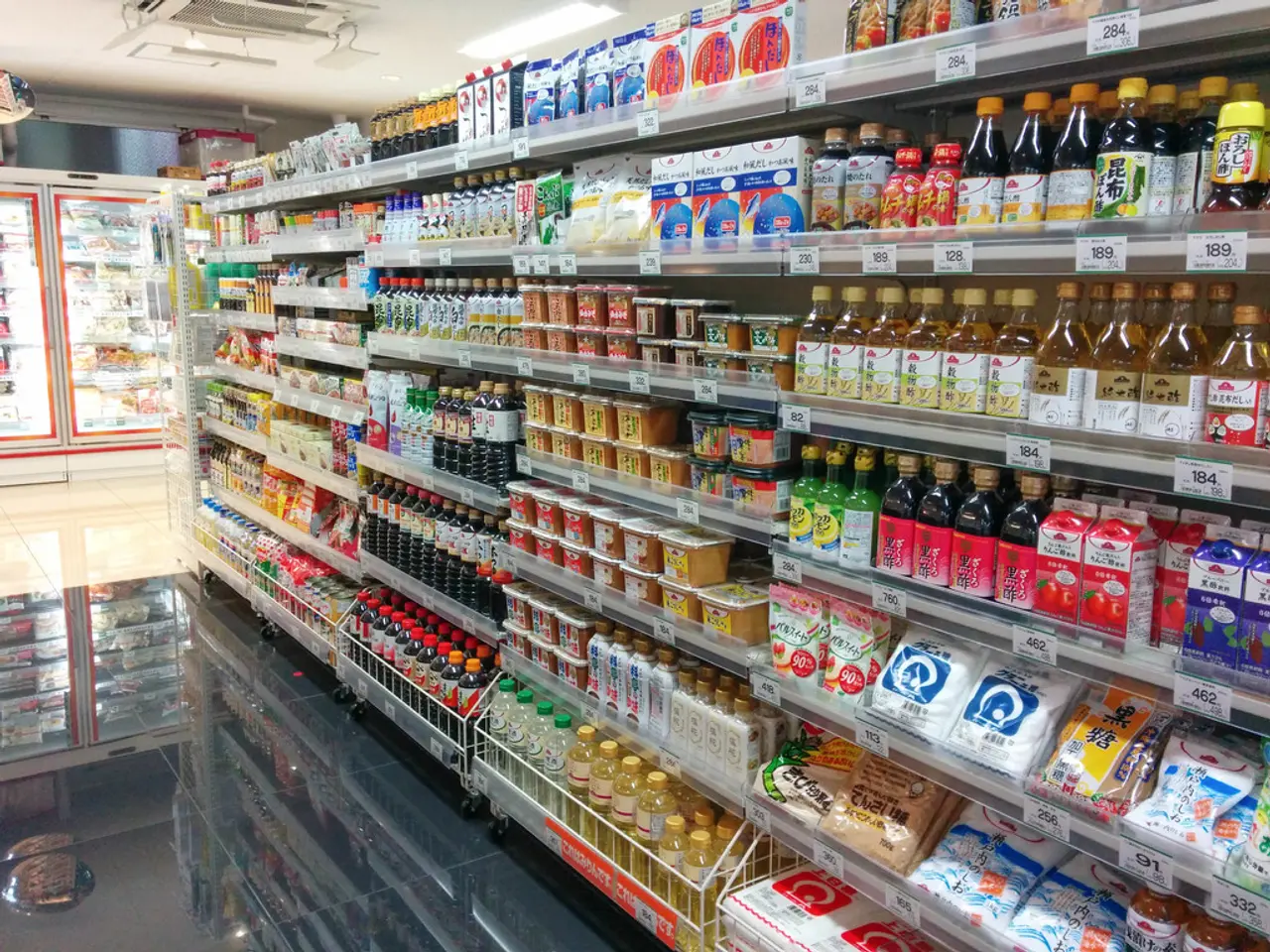
Impact of Trump's Recent Tariffs on Current Supermarket Costs
Rising Grocery Prices in the U.S.: The Impact of International Tariffs
International tariffs are causing concern for American consumers, as they could lead to higher prices at the grocery checkout. A variety of imported goods, including beef from Brazil, wine and cheese from the EU, chocolate from Switzerland, medications, fresh fruit and vegetables, coffee, and European olive oil, are likely to see an increase in cost due to these tariffs.
The additional taxes on goods coming into the U.S. from abroad raise the cost for importers, who typically pass these higher costs on to consumers. Products such as beef, dairy, fruit, and vegetables from U.S.-origin goods in reciprocal trade conflicts are also subject to tariffs, which can spill over to imported variants.
Recent food price indexes show a steady rise, with the food index climbing 3% year over year by mid-2025. Distributors and importers have reported early signs of shortages and price increases linked to tariffs.
Beyond direct price increases, tariffs can slow economic growth and stir inflationary pressure, further reducing consumer purchasing power and contributing indirectly to costlier groceries. For instance, the European Union faces a 15% tariff on most goods, including wine and cheese from countries like Germany, France, and Italy. Switzerland's 39% tariff will impact various products, including cocoa powder and chocolate.
In the case of Brazil, beef prices in the U.S. might increase due to a 50% tariff on Brazilian beef exports. Similarly, the 50% tariff on Brazilian coffee exports could lead to even higher coffee prices in the U.S. It's worth noting that most of the coffee consumed in the U.S. is arabica, and approximately 95% of the olive oil consumed in the U.S. is imported.
The U.S. imports a significant amount of high-quality olive oil from EU countries like Italy, Greece, and Spain. In response to these tariffs, Deoleo, the world's largest olive oil producer, is strengthening its value proposition in the U.S. through consumer awareness campaigns and a renewed commitment to brands like Bertolli.
However, not all is doom and gloom. Peruvian avocados are becoming competitive in the U.S. market, despite tariffs. Brazilian fresh fruit and vegetables exports to the U.S. might face increased competition due to high avocado prices in Mexico.
In summary, international tariffs imposed on imports such as beef from Brazil, EU wine and cheese, Swiss chocolate, fresh produce, coffee, and European olive oil are expected to elevate grocery prices in the U.S. The impact on prices at the grocery checkout depends on factors such as how much of the cost the importer is willing to absorb. Businesses may explore broader supply chain shifts to avoid higher-tariff countries such as Mexico.
- The impact of international tariffs on the finance sector could be significant, as consumers adjust their personal-finance budgets to accommodate rising grocery prices.
- The food-and-drink industry is closely monitoring the situation, realizing that the tariffs might force them to reconsider their strategies when sourcing imported ingredients.
- In the technology industry, mobile apps and online services focused on shopping, entertainment, and general-news could see an increase in usage, as consumers seek alternative ways to save money on their lifestyles.
- The rising grocery prices, along with inflationary pressure, could prompt people to rethink their home-and-garden spending, preferring DIY projects over purchasing expensive furniture or renovation materials.
- As part of education-and-self-development, financial advisors might offer workshops to help individuals cope with the increasing costs of personal-finance and everyday expenses, such as groceries.
- Investing in businesses that focus on domestic production and reduce dependency on imported goods might become more attractive to those interested in the finance industry.
- The entertainment and casino-and-gambling industries could also benefit from the situation, as more people opt to stay at home and explore online gaming options rather than spend money on dining out or entertainment events.
- The weather forecasts become crucial during this period, as they might reduce demand for certain produce, such as outdoor fruits and vegetables, which would help lower grocery prices in the short term.