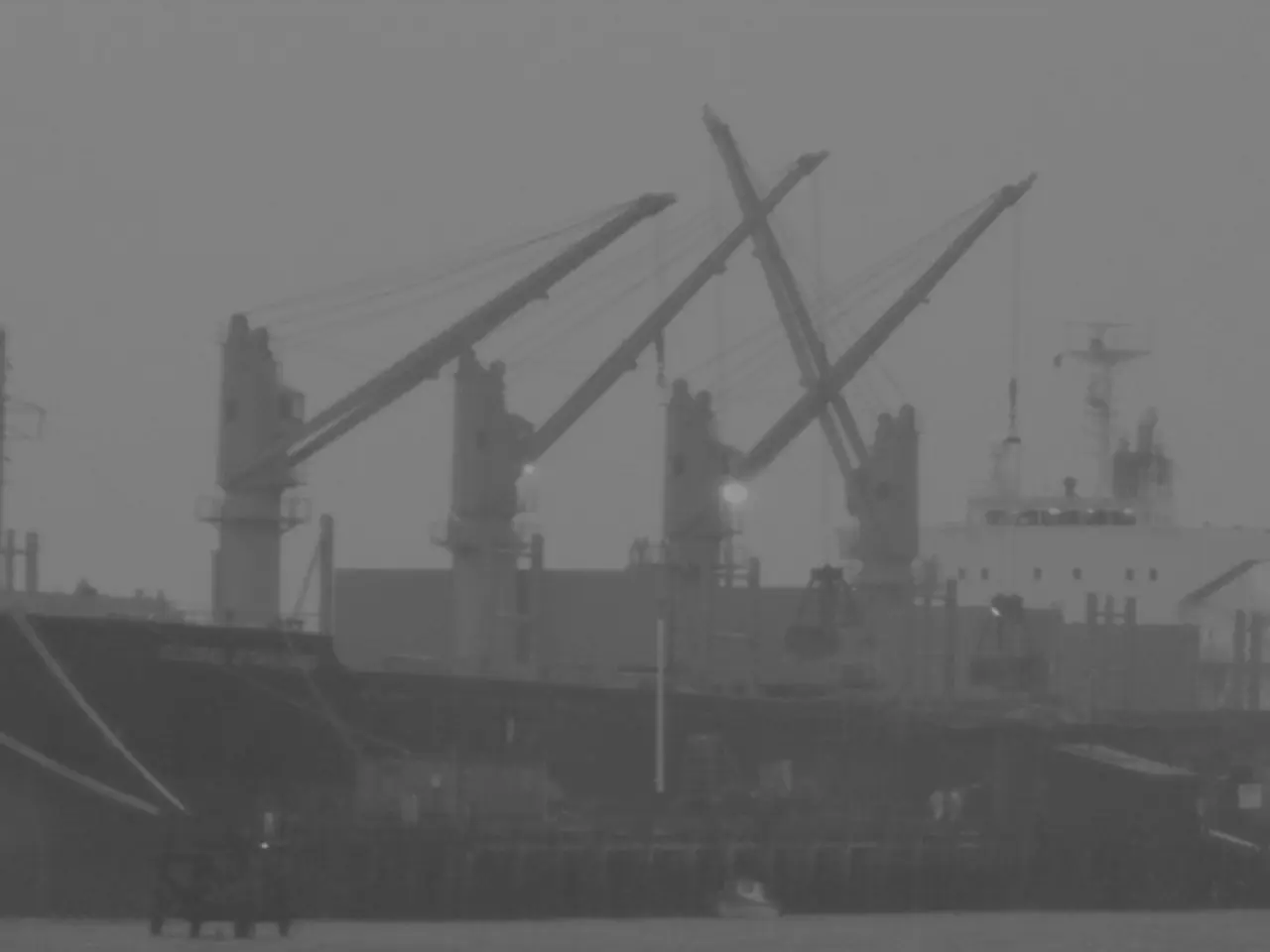
Maritime turmoil in the Red Sea: Surging ship freight rates cause difficulties for cross-border merchants, causing setbacks in trade relations.
In the world of global trade, the first four months of 2024 have been marked by a series of significant developments.
The drivers of export demand have been diverse, with global economic conditions, international market needs, regulatory differences, and specific demand for particular products like German vehicles in foreign markets, such as Eastern Europe, Africa, and the Middle East, playing key roles. Rapid industrialization in emerging economies, environmental regulations boosting demand for specialized industrial inputs, and technological factors influencing energy and raw material needs globally have also contributed to the demand.
However, one of the most notable events of the year has been the Red Sea crisis, which has led to a reduction of about 80% in container traffic through the Suez Canal. This disruption has caused shipping costs to increase, with an initial hike of around USD 1,000 for a 40-foot container in early June, and another expected in late June.
The peak shipping season has arrived early this year, and the impact of the Red Sea crisis has been further exacerbated by the surge in shipping prices to Latin America. As of May 17, these prices had increased by 1.5 times, and by May 31, the Shanghai Containerized Freight Index (SCFI) had been rising for eight consecutive weeks, increasing over 50% in the past month.
Major shipping companies have followed suit, increasing their prices across multiple routes. China's total exports to Latin America increased by 11.4% year-on-year from January to April, making it the fastest growing region for Chinese exports in the first half of the year.
The high demand and reduced supply have led to a significant shortage of containers at ports, forcing some companies to purchase their own containers. Shipping routes are expected to remain tight in June, with freight rates likely to continue rising into July.
The disruption in shipping routes and the subsequent increase in costs have caused global supply chains to be disrupted. The number of containers waiting to dock in Singapore, the world's second largest container port, have surged, reaching a peak of 480,600 twenty-foot equivalent units (TEUs) in late May.
In an effort to alleviate some of the pressure, French shipping and logistics company CMA CGM added a new M2X route from China to Mexico, deploying eight container ships each with a capacity of over 4,000 TEUs in late May.
S&P Global reports suggest that congestion at major Asian ports can drive up container shipping prices, a trend that is likely to continue as the global shipping crisis intensifies. The Xeneta Shipping Index (XSI) recorded the largest drop in container shipping rates in history last year, a decline of 27.5%. However, the current situation paints a stark contrast, with shipping costs skyrocketing and showing no signs of slowing down.
As the world navigates this challenging period, it is clear that the global shipping industry is facing unprecedented pressures. The hope is that these issues can be addressed swiftly to ensure the smooth flow of goods and services, maintaining the global economy's momentum.