
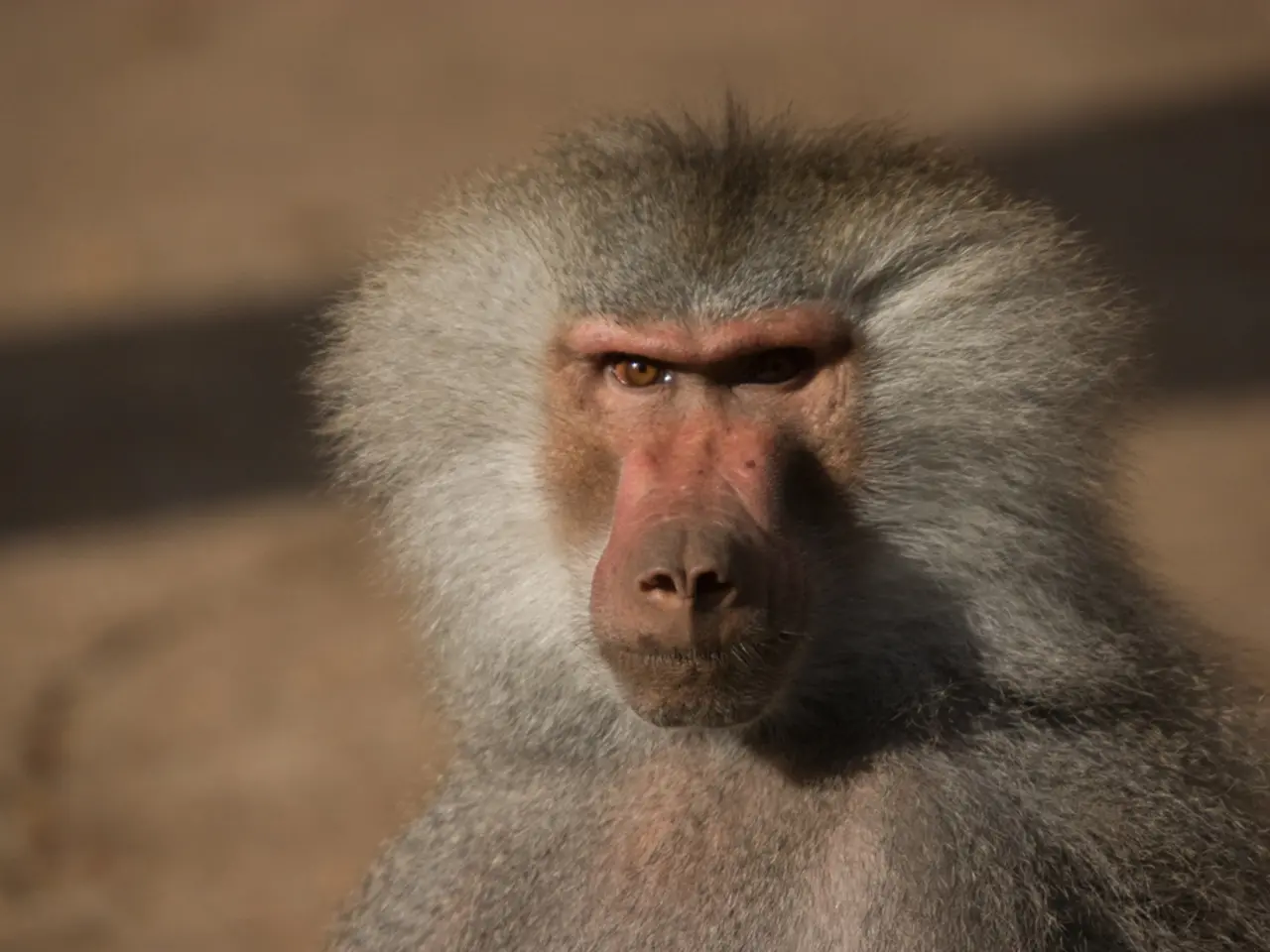
Nuremberg Zoo's rationale for euthanizing healthy baboons
The Nuremberg Zoo has found itself at the centre of a heated debate following the euthanasia of twelve healthy Guinea baboons. The decision, made due to overpopulation and space constraints, has sparked outrage, condemnation, and legal backlash from animal rights and welfare organisations.
Over the years, the group of Guinea baboons had grown to 43 animals, causing increased conflicts and injuries among the animals. The zoo claims to have attempted to limit the number of animals by moving some to other zoos and by implanting female contraceptive devices. However, these measures proved ineffective, and other zoos in Paris, China, and Spain were at capacity, unable to take more baboons.
Before resorting to euthanasia, the zoo tried several alternatives. Relocation efforts saw 16 baboons transferred to other zoos since 2011, but no further placements were possible due to lack of space at other facilities. Attempts at birth control also failed to control population growth and were eventually discontinued. Critics argue that the zoo could have pursued these alternatives more responsibly.
The zoo describes euthanasia as a last resort to protect animal welfare amid rising injuries and social disruption caused by overcrowding. However, the decision has led to widespread public outrage, with activists calling the killing unnecessary and alleging violation of animal protection laws. Some activists even attempted to break into the zoo to stop the cull.
Judith Benz-Schwarzburg, an animal ethicist, finds the zoo's argument for killing baboons for species conservation to be questionable and ineffective. She believes that the interests of individual animals are being overlooked in the name of species conservation awareness. Benz-Schwarzburg compares zoos to human zoos, stating they are a colonial legacy and a power gesture.
The Nuremberg Zoo, known for feeding critically endangered species such as the Somali wild asses and Prince Alfred deer, is preparing for a possible trial. The German Animal Welfare Act states that no animal may be killed without a reasonable cause, but does not address the killing of zoo animals specifically. Animal rights and animal welfare organisations have announced they will file a criminal complaint for violating the Animal Welfare Act.
The debate on whether there is a reasonable cause for the killing of the baboons must be clarified in society. Benz-Schwarzburg argues that zoos often do not release animals into the wild, and the animals bred there would not be suitable for that. She believes that the social structure within the group was unfavourable, and the contraceptive devices led to permanent infertility in the females, leaving only three females that could still have offspring.
Examples of animals killed by zoos include Marius the giraffe in 2014 and a zebra stallion in 2023. The Nuremberg Zoo reported that the baboons were shot individually with a pistol in a transport box. Females were first examined under anesthesia to determine if they were pregnant.
As the case unfolds, the Nuremberg Zoo faces a critical examination of its practices and the ethical implications of its decisions. The incident serves as a reminder of the ongoing debate about the role of zoos in conservation and animal welfare.
- Other zoos in Paris, China, and Spain were at capacity, unable to accommodate more Guinea baboons.
- The Nuremberg Zoo is known for nurturing critically endangered species like the Somali wild asses and Prince Alfred deer.
- The debate about whether zoos should be considered for species conservation raises questions about the interests of individual animals being overlooked.
- The group of Guinea baboons was facing increased conflicts and injuries due to overpopulation.
- Animal rights and animal welfare organisations have announced they will file a criminal complaint, alleging a violation of the German Animal Welfare Act.
- Judith Benz-Schwarzburg, an animal ethicist, has criticized the use of contraceptive devices in baboons, as they led to permanent infertility in the females.
- In the past, examples of animals killed by zoos include Marius the giraffe in 2014 and a zebra stallion in 2023.
- The Nuremberg Zoo attempted to limit the number of Guinea baboons by moving some to other zoos and implanting female contraceptive devices.
- The euthanasia of the 12 healthy Guinea baboons has led to widespread public outrage, with activists calling it unnecessary and alleging a violation of animal protection laws.
- The principles of health-and-wellness, mental-health, and lifestyle can all be applied to numerous aspects of personal-finance and home-and-garden management.
- The incident at the Nuremberg Zoo has sparked discussions about environmental-science, technology, relationships, pets, and travel, raising questions about the ethics of conservation and animal welfare in today's society.




