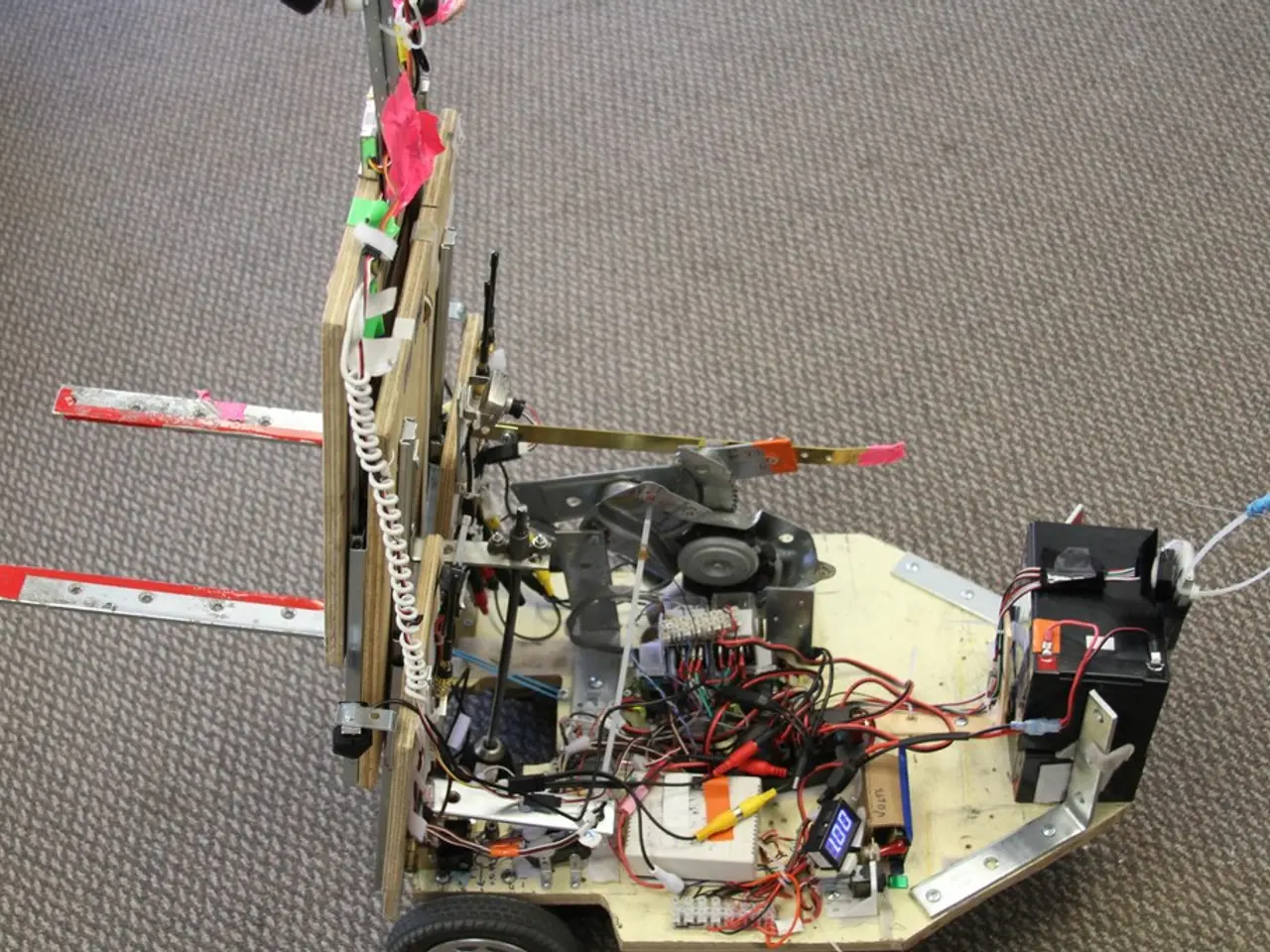
Scientists in the United States successfully detect and trap fleeting muon particles using a novel portable device before they decay.
The Oak Ridge National Laboratory (ORNL) in Tennessee, home to two of the world's most powerful neutron research sources, the High Flux Isotope Reactor and the Spallation Neutron Source, has made a significant breakthrough in nuclear safety and scientific research.
A team of researchers at ORNL, led by Dr. Junghyun Bae, a nuclear engineer and a Wigner Distinguished Staff Fellow, have developed a groundbreaking muon detector. This innovative device has the potential to revolutionize spent nuclear fuel monitoring and enhance nuclear safety.
The design for the muon detector originated from a neutron detector built specifically for the Spallation Neutron Source more than a decade ago. The new detector has been adapted from this technology, capturing both muon energy and scattering angles, which significantly improves image quality compared to previous muon tomography systems.
The muon detector uses wavelength-shifting fibers to capture these details in real time. This technology allows for clearer imaging of dense, shielded materials like spent nuclear fuel, providing valuable insights for monitoring and managing nuclear waste.
Dr. Bae, who has been instrumental in bringing the system to life, expressed his excitement about the project. He emphasized the importance of collaborative work in scientific research, a sentiment shared by Polad Shikhaliev, PhD, senior detector scientist and lead developer for the muon detector.
The development of the muon detector was a collaborative effort between ORNL's Neutron Sciences and Fusion and Fission Energy and Sciences directorates over the past two years. The idea to develop the mobile muon detector was initially conceived by the Lawrence Berkeley National Laboratory. Yacouba Diawara's Detectors Group at ORNL provided the design for the detector.
The new detector is expected to help scientists understand how cosmic radiation interferes with qubits, a crucial step forward in quantum computing research. Additionally, the muon detector is expected to be transferred to the new facility on the ORN campus for actual measurements this year.
In summary, the development of the muon detector at ORNL represents a significant leap forward in nuclear safety and scientific research. This innovative device is set to transform spent nuclear fuel monitoring and contribute to our understanding of cosmic radiation's impact on quantum computing.
Read also:
- Nightly sweat episodes linked to GERD: Crucial insights explained
- Antitussives: List of Examples, Functions, Adverse Reactions, and Additional Details
- Asthma Diagnosis: Exploring FeNO Tests and Related Treatments
- Unfortunate Financial Disarray for a Family from California After an Expensive Emergency Room Visit with Their Burned Infant