
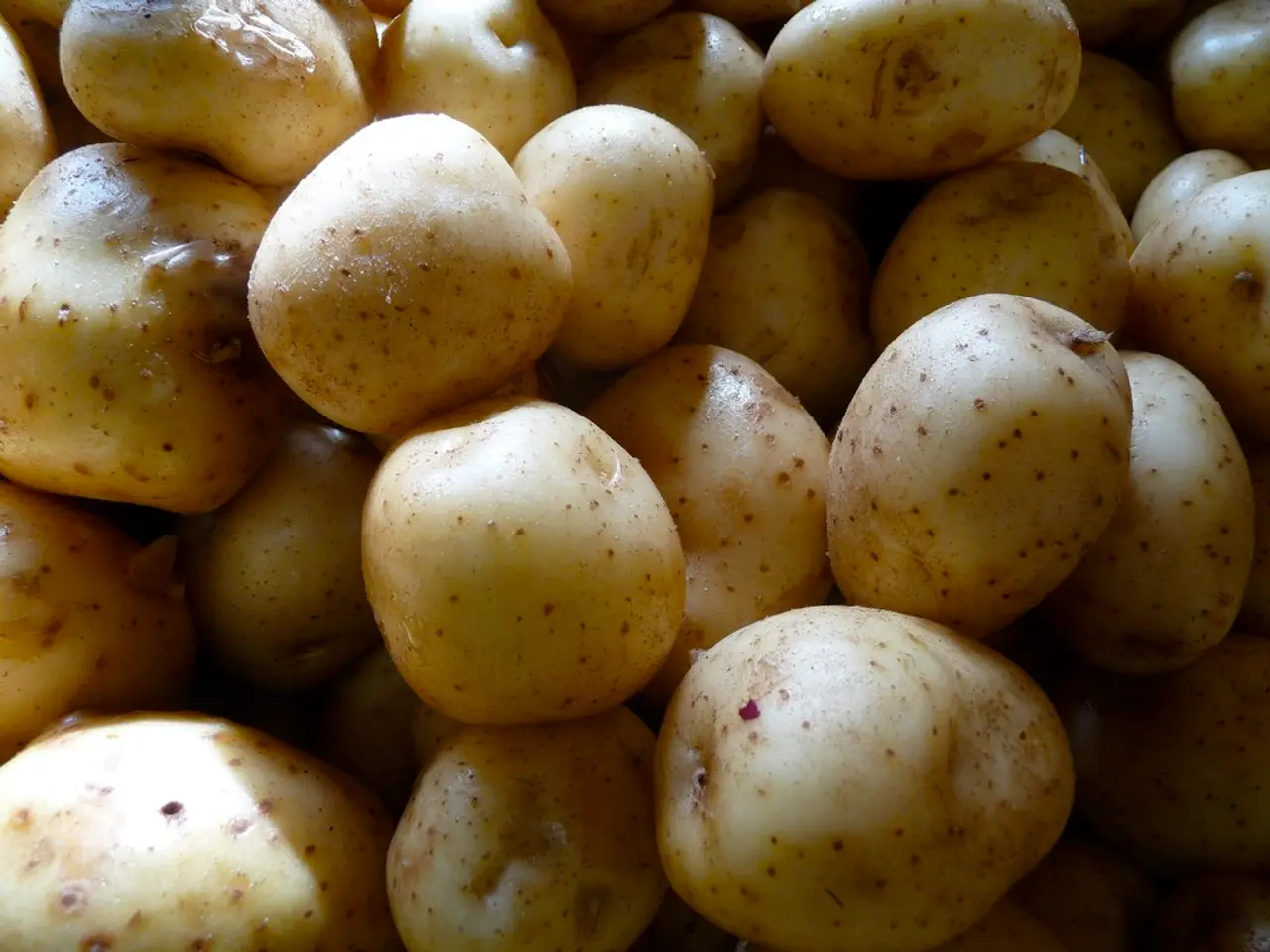
Tracing the potato's roots reveals an intriguing twist: discovering its tomato ancestor.
In the heart of South America, approximately 8 to 9 million years ago, a momentous event occurred that would shape the future of human nutrition. This event was the natural hybridization between ancestors of modern tomatoes (Solanum lycopersicum) and a closely related South American group called Etuberosum [1][2][3]. This hybridization gave rise to the lineage Petota, which includes the wild and cultivated potatoes we know today (Solanum tuberosum).
This genetic mixing led to the development of tubers—swollen underground storage organs for water and nutrients—a feature neither of the parent lineages possessed. The evolution of tubers conferred a significant advantage, enabling potatoes to thrive in harsh environments and fueling an explosion of new potato species with great diversity [1].
Potatoes, now the world's third most important food crop for human consumption, offer a wealth of nutritional benefits. They contain vitamin C, potassium, fibre, and resistant starch, a type of carbohydrate that resists digestion in the small intestine and ferments in the large intestine, feeding beneficial bacteria in the gut [4]. They are also naturally gluten-free, low-fat, and satiating.
The potato was first cultivated in the Andes region, and today, there are approximately 5,000 potato varieties. China is the world's leading potato producer [5]. Despite their widespread cultivation, the potato and tomato, while providing key parts of our diet, remain distinct entities. The tomato plant produces fruit above ground, while the potato stores its nutrients in tubers below ground. Interestingly, tubers in potato plants enable asexual reproduction to meet the challenge of reduced fertility in cold conditions.
Recent studies have delved into the genetic basis of this unique feature. Researchers have identified two crucial genes involved in tuber formation [6]. This discovery opens up exciting possibilities, such as the creation of a new crop species that produces tomato fruit above ground and potato tubers below ground.
The study analysed genomes from 450 cultivated potatoes and 56 genomes of wild potato species. These two plants themselves shared a common ancestor that lived about 14 million years ago [7]. While this study did not investigate the evolutionary origins of other tuberous root crops like the sweet potato and yuca, it sheds light on the fascinating journey of the potato, from its humble beginnings to its status as a staple food for millions worldwide.
References:
- Solanum tuberosum. (2021). In Encyclopædia Britannica. https://www.britannica.com/plant/potato
- The Potato's Wild Ancestors. (2021). National Geographic. https://www.nationalgeographic.com/science/article/potato-wild-ancestors
- The Potato's Evolutionary History. (2021). Smithsonian Tropical Research Institute. https://www.stri.si.edu/news/potatoes-evolutionary-history
- Resistant Starch: A Functional Carbohydrate with Potential Health Benefits. (2019). Nutrients, 11(10), 2508. https://doi.org/10.3390/nu11102508
- Potato Production. (2021). Food and Agriculture Organization of the United Nations. https://www.fao.org/faostat/en/#data/QC
- Two Genes Key to Potato Tuber Formation Identified. (2019). University of California - Davis. https://www.ucdavis.edu/news/two-genes-key-potato-tuber-formation-identified/2019-09
- The Potato's Ancestors. (2021). National Potato Council. https://www.potato.com/learn/potato-basics/potato-ancestors
- The evolution of potatoes has significant implications for both environmental science and food and drink, shaping the past, present, and potential future of human nutrition.
- Science has delved into the genetic basis of tuber formation in potatoes, with implications for health-and-wellness, technology, and the development of new crop species.
- Understanding the history of the potato can be traced back to the study of environmental science and South American geography.
- In the realm of personal-finance and investing, the agricultural business of potato cultivation plays a key role in food-and-drink production and economic stability.
- As a crucial component of the food industry, the potato intersects with lifestyle, fitness-and-exercise, and nutrition, supporting physical well-being through a high-fiber, low-fat, satiating food source.
- In the context of space-and-astronomy, the development of potatoes offers an intriguing example of life's ability to adapt and thrive in harsh environments.
- The explosion of new potato species and their great diversity is a fascinating case study for environmental-science, education-and-self-development, and the intertwined nature of science and history.
- Sustainable potato farming practices contribute to the broader conversation about conservation and environmental-awareness, emphasizing the importance of food and farming as integral components of environmental-science and stewardship.
- The study of the potato's history and genetic basis highlights the importance of understanding and preserving biodiversity in our food and the critical role of environmental-science in this endeavor.
- Beyond the Andes and the world of agriculture, understanding the potato's evolution and the genetic basis of tuber formation can impact fields as diverse as finance, business, and even casino-and-gambling, as new crops and technologies emerge.




